

English Language Coaching
Develop confidence in English while engaging critically and exploring new ideas.
English as a Foreign Language at Winchester
This enriching two-week programme combines English language development with creativity, critical thinking and real-world communication, giving students the confidence to use English beyond the classroom.
Designed for learners of all levels, the programme is carefully adapted to meet students’ individual language needs. Students are placed in classes according to their age and level, with teaching, activities and projects adapted to ensure that every learner is appropriately supported and challenged.

A Socratic Classroom
Students develop their speaking, listening, reading and writing through stimulating topics, lively discussion, creative challenges and collaborative projects. Whether developing the confidence to take part in their first conversation in English or refining the skills needed to express complex ideas, students are encouraged to use English to think, question, create and connect.
The result is a language-learning experience that is accessible, challenging and rewarding for every level of learner
What Students will Gain
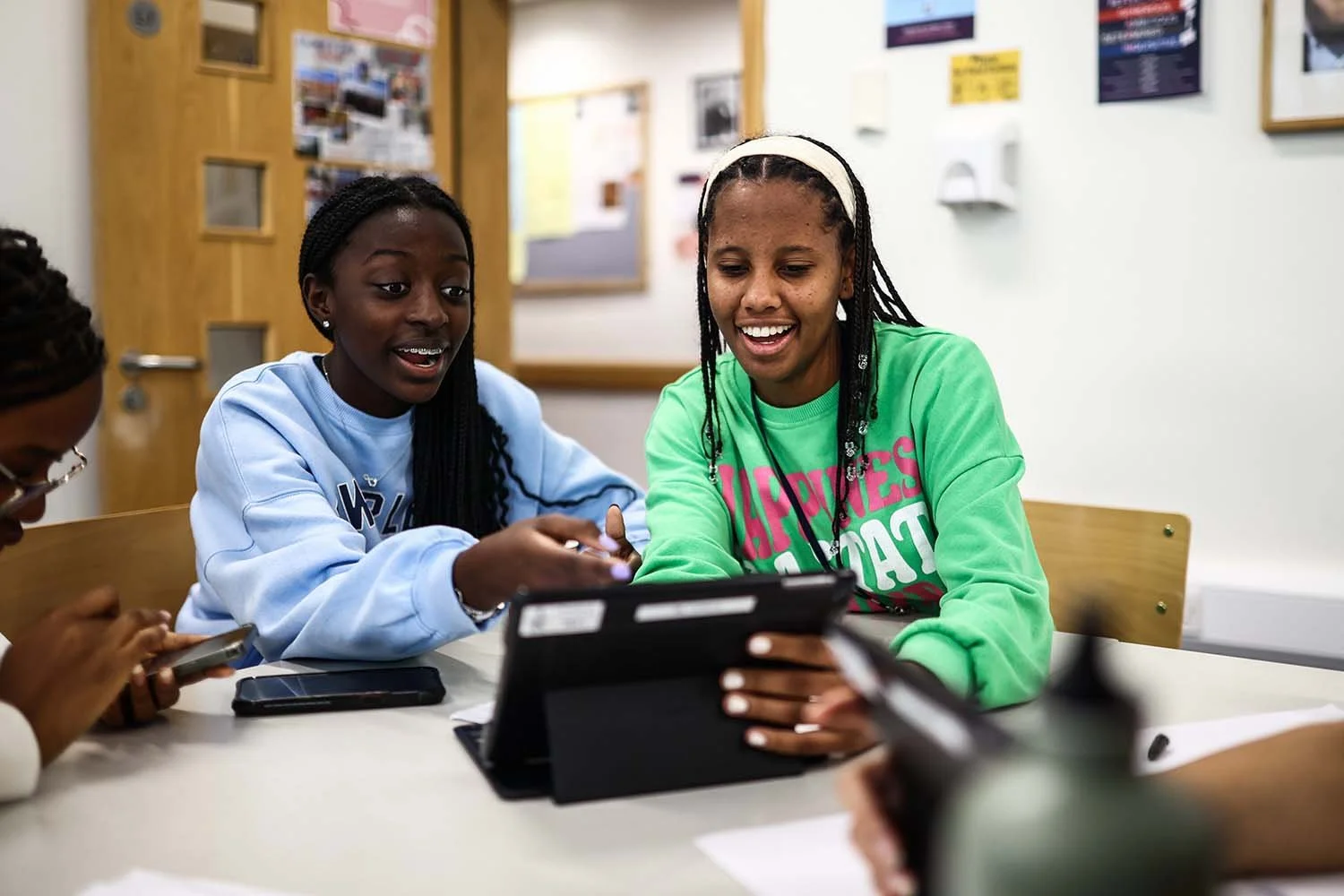
By the end of the programme, students will speak, listen, read and write more confidently in English, with broader vocabulary and greater accuracy. They'll be more comfortable sharing opinions, asking questions, and joining discussions, and will have practised using English to collaborate, solve problems, and navigate different cultural perspectives, including strategies for getting their point across even when they don't know every word.
Crucially, this happens through real practice: meals, activities, and electives run in English, often alongside native speakers, giving students genuine everyday opportunities to use the language.
The core message: learning a language isn't just about accuracy, it's about gaining the confidence to use your voice and connect with others.

Programme Structure
-

Module 1: Communication and Fluency
This module builds confidence in spoken English, helping students find their voice in a global community. Through interactive activities, roleplays, and storytelling, students develop fluency, expand vocabulary, and practise expressing opinions in everyday and cultural contexts.
-

Module 2: Understanding and Ideas
Students strengthen listening and reading skills while exploring engaging themes such as culture, technology, and everyday life. Through accessible texts, videos, and discussions, students practise comprehension strategies and learn to share ideas clearly.
-

Module 3: Writing and Creative Expression
This module focuses on writing for communication, creativity, and clarity. Students practise sentence structure, organisation, and vocabulary through engaging tasks such as letters, adverts, blogs, and cultural comparisons
-

Module 4: Accuracy and Real-World English
This module strengthens grammar, vocabulary, and accuracy, showing students how to apply these tools in real-world contexts. With a focus on problem-solving, logical thinking, and communication strategies, learners build confidence in using English correctly and effectively.
English in Action Project
This project introduces students to the concept of global citizenship while enabling them to develop language skills, critical thinking and cross-cultural awareness. Each student works through a structured process designed to mirror real problem-solving:
Define a Problem: Students practise describing an issue in English, identifying who it affects, where it happens, and why it matters.
Generate Solutions: In groups, they explore possible answers, learning the vocabulary of creativity, persuasion, and possibility.
Evaluate and Decide: Students compare and refine their ideas, using the language of evidence, trade-offs, and decision-making.
Present the Outcome: The programme culminates in a short group presentation, giving students the chance to showcase their progress, teamwork, and confidence in English.

Language Immersion
The residential experience on our summer programme ensures immersion in English from morning to evening. Lessons are supported by meals, activities, and electives conducted in English, often alongside native English speakers, giving students countless opportunities to practise conversational skills in authentic settings.

Book your Spot
£4,800
for a two-week residential course
Dates:
Monday 5th July - Sunday 18th July
Monday 19th July - Sunday 1st August
Frequently Asked Questions
-
The course welcomes students of all language levels, from developing speakers to those aiming for greater fluency. Ahead of arrival, each participant completes a short assessment to ensure placement in a group that matches their current ability. Lessons are then tailored to stretch each learner while maintaining confidence and engagement.
-
Teaching follows a Socratic, discussion-led approach, where learning takes place through dialogue, questioning, and debate rather than memorisation. Lessons focus on practical communication across speaking, listening, reading, and writing, with grammar and vocabulary developed naturally through exploration of meaningful ideas and real-world topics.
-
The English in Action Project is at the heart of the course. Working in teams, students research, design, and present solutions to global or community-based challenges. This process builds critical thinking, collaboration, and persuasive communication skills while reinforcing the language of creativity, problem-solving, and presentation.
-
English is used throughout the entire programme - in lessons, activities, meals, and social events - creating an immersive environment where communication becomes natural. Teachers encourage active participation and provide continuous feedback, helping students express ideas clearly and develop confidence through real interaction.
-
By the end of the English Language Coaching programme, students will have:
Greater confidence communicating in English at their own level
Stronger speaking, listening, reading and writing skills
A wider range of vocabulary and greater accuracy when using English
More confidence expressing opinions, asking questions and taking part in discussions
Experience using English to collaborate, solve problems and develop ideas
Greater ability to understand different perspectives and communicate across cultures
Strategies for communicating effectively, even when they do not know every word
Experience using English in real-world situations beyond the classroom.
Through meals, activities, and electives conducted in English, often alongside native English speakers, students gain countless opportunities to practise conversational skills in authentic settings.
Most importantly, they’ll discover that learning a language is not just about getting the words right.
It’s about having the confidence to use your voice, connect with others and make yourself understood.