

CATALYST Horizons
An interdisciplinary academic course designed for ambitious and curious students aged 14-17.
About horizons
The CATALYST Programmes are for academically ambitious and curious minds. Taught by Winchester College teachers. The course invites students to explore questions that do not always have straightforward answers — from how technology is changing our lives to what makes an argument convincing, how science shapes our understanding of the world, and how ideas influence the choices we make.
Students encounter a stimulating range of subjects and ideas, making connections between disciplines and learning to look at familiar questions in new ways. The aim is not simply to acquire knowledge, but to become more confident thinking with it.

Learning through Enquiry
CATALYST is built around the belief that some of the most valuable learning begins with a good question.
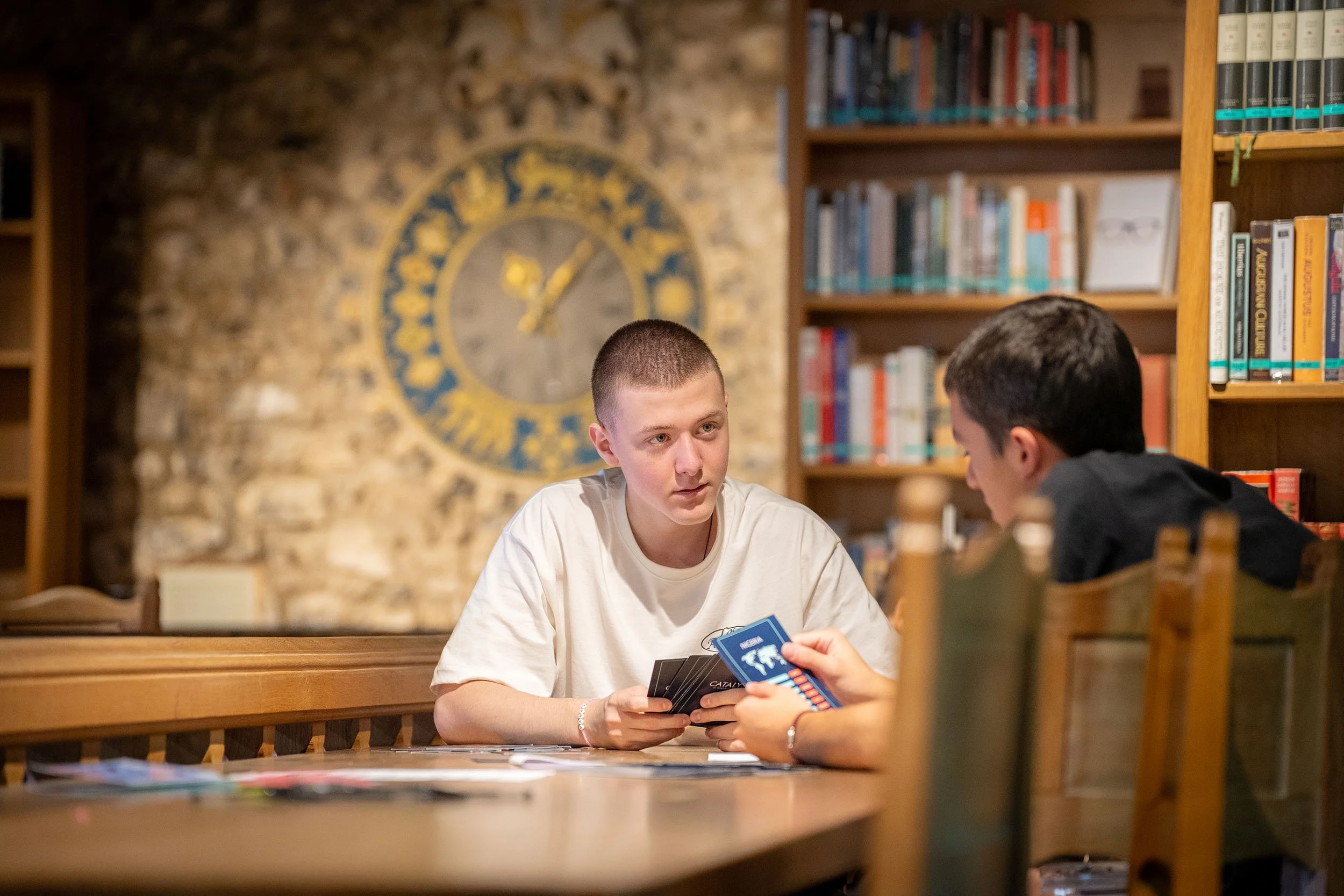
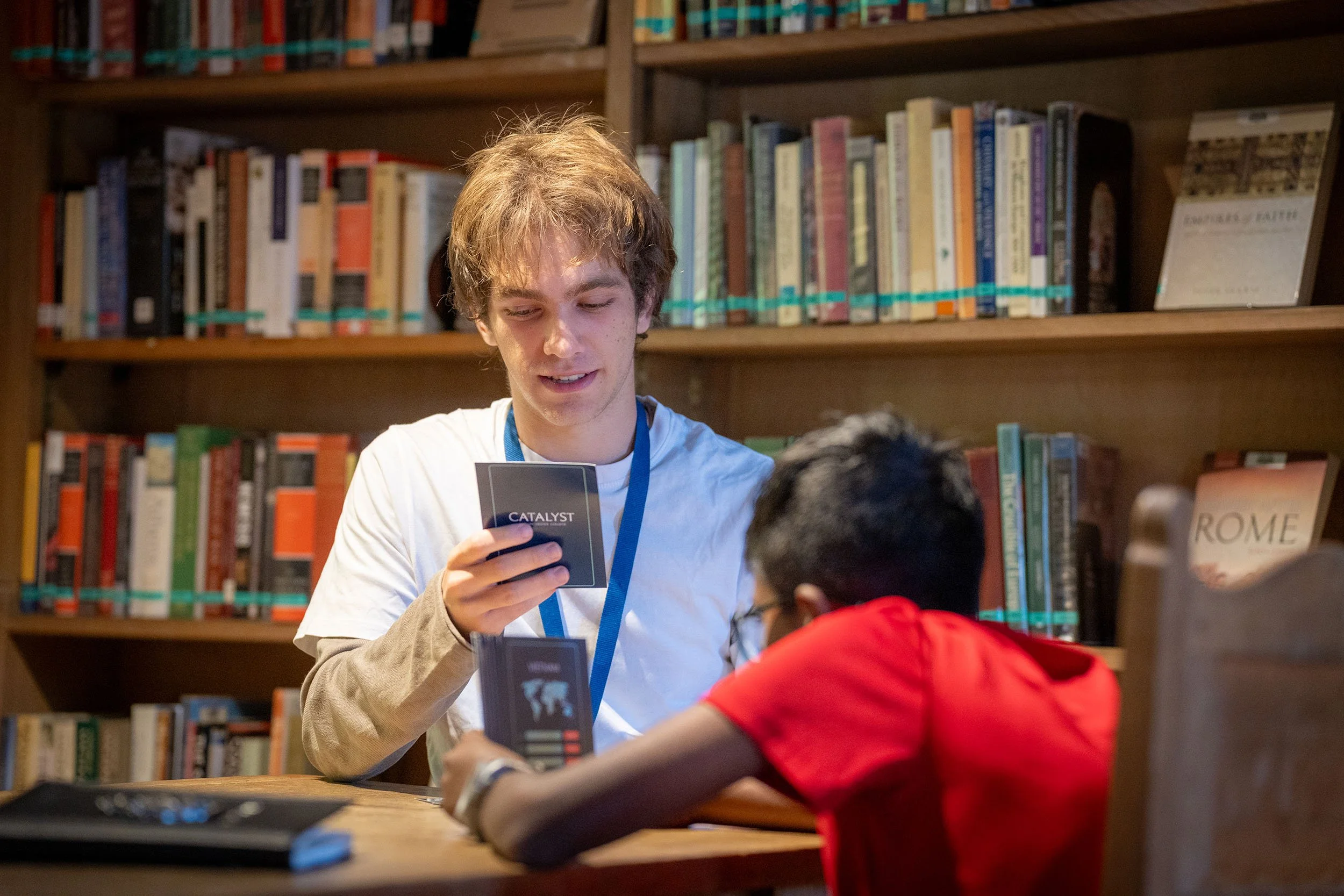
Students are encouraged to be curious, test ideas and consider different possibilities. Through discussion, practical challenges, experiments, stories, debates and collaborative projects, they move between asking questions, exploring possibilities and developing their own ideas.
CATALYST Horizons takes these intellectual challenges further. Students engage with greater complexity and abstraction, testing assumptions, analysing evidence, challenging different perspectives and developing arguments of their own.

One CATALYST Journey
Horizons builds the habits that underpin academic enquiry: question, analyse, challenge, evaluate, defend.
Students are encouraged to go beyond knowing the answer and start thinking about how we know, why we think what we think, and what might happen if we looked at the problem differently.
CATALYST Horizons helps students make the transition from school to university-level study anywhere in the world. Students develop the habits of thinking and academic skills needed to think independently, communicate ideas clearly, participate actively and engage critically with their studies — building the confidence to thrive in a university environment.
Programme Structure
-

Week 1: Ideas and Inquiry
Technology & Ethics: What happens when new technology changes the way we live? Explore the promises and risks of AI, biotechnology and emerging technologies, and consider how innovation can shape society.
Language & AI: Can a machine really understand language? Explore the differences between human and artificial intelligence through a live Turing Test and the bespoke Beat the Machine challenge.
Philosophy of Self: What makes us who we are? Debate questions of identity, personhood and what it means to be human, exploring different perspectives from psychology, culture and law.
Critical Challenges: Can you change someone’s mind? Take on debates, conundrums and thought-provoking challenges. Learn to build an argument, defend your position and test your ideas against others.
-

Week 2: Application and Impact
Science & Patterns: Can we always trust what we see? Investigate illusions, cognitive biases and natural laws, and explore how scientific thinking has developed from Aristotle to modern physics.
Economics & Prosperity: What makes a society prosperous? Explore money, wealth, wellbeing and inequality through global indicators, interactive games and data challenges.
Heritage & Culture: What should we preserve for the future? Explore how heritage, traditions and cultural legacies shape identity and value, and consider how they can evolve in a changing world.
Creative Problem-Solving: Can you solve a problem that really matters? Work in teams to develop and test bold solutions to real-world challenges, then present your ideas with clarity, creativity and confidence.

Horizons Capstone Project
The Capstone Project is the showcase piece of the CATALYST experience - an opportunity for students to take their learning beyond the classroom and apply it to a challenge that matters to them.
Students explore a real-world issue, develop their own ideas and work towards an imaginative response. Students are expected to investigate their issue in greater depth, consider competing perspectives, evaluate their ideas and develop a more independently reasoned response. The emphasis shifts towards critical thinking, intellectual independence and persuasive communication.
It culminates in a final presentation, giving students the opportunity to make their thinking visible - to explain not only what they have created, but why they think it matters and how their thinking has developed.
The result is more than a finished project. It is an experience of thinking like a scholar: starting with a question, navigating uncertainty, developing an idea and having the confidence to put it into the world.

What will Students gain?
By the end of CATALYST Horizons, students will have greater confidence in expressing and defending their ideas, stronger critical-thinking and problem-solving skills, and experience analysing complex questions from different perspectives. They'll be better able to evaluate information, evidence and arguments, engage confidently with unfamiliar ideas, and communicate and present with greater skill — along with a stronger sense of independence as learners and thinkers.
Most importantly, they'll discover that challenging an idea is often the beginning of better thinking. It's about asking why, exploring what if, and considering what next.
Journey towards what’s next
CATALYST Horizons is designed to help students take their thinking further, developing the academic confidence, independence and communication skills that will support them as they progress towards university and beyond.
Through interdisciplinary study, discussion, research and the Capstone Project, students experience the challenge of exploring complex ideas and developing their own informed perspectives.
But the goal is about more than academic preparation. Students leave with greater confidence in their ideas, a deeper curiosity about the world, and the ambition to keep questioning, exploring and shaping what comes next.
Testimonials
“CATALYST took his education to the next level. It helped him develop the skills he needs for senior school and beyond.”
“I gained skills in many different areas: teamwork, how to think at speed and form a solid argument, and how to be pushed out of your comfort zone.”
Book CATALYST Horizons
£5,750
For a two-week residential course
Dates:
Monday 5th July - Sunday 18th July
Monday 19th July - Sunday 1st August
Frequently Asked Questions
-
The CATALYST Horizons Programme is ideal for ambitious and intellectually curious students aged 14-17 who are eager to explore big ideas across disciplines. It’s particularly suited to those who enjoy discussion, debate, and creative problem-solving, and who want to experience an academic environment that challenges them to think deeply and independently.
-
Over two weeks, students explore a range of interconnected disciplines including science, philosophy, artificial intelligence, ethics, economics, and cultural studies. Each theme is approached through interactive workshops, debates, and collaborative challenges - culminating in a capstone project that encourages students to apply their learning to real-world issues.
-
Every session is interactive and discussion-led, with an emphasis on inquiry and exploration rather than memorisation. Students engage in Socratic dialogue, collaborative problem-solving, and reflective exercises designed to challenge assumptions and encourage original thought. The small group setting ensures personalised feedback and meaningful participation.
-
The Capstone Project is the centrepiece of the CATALYST experience. It allows each student to investigate a topic that inspires them, develop an evidence-based solution, and present their findings at the end of the course. This process strengthens critical thinking, research skills, creativity, and confidence - qualities that are invaluable for future academic and professional success.
-
By the end of CATALYST Horizons, students will have:
Greater confidence in expressing and defending their ideas
Stronger critical-thinking and problem-solving skills
Experience analysing complex questions from different perspectives
Greater ability to evaluate information, evidence and arguments
The confidence to engage with unfamiliar and challenging ideas
Stronger communication, presentation and discussion skills
Experience applying academic thinking to real-world challenges
A greater sense of independence as learners and thinkers
Most importantly, they’ll discover that challenging an idea is often the beginning of better thinking.
It’s about asking why, exploring what if, and considering what next.
-
CATALYST Horizons gives students a taste of university-level study - encouraging independent thought, interdisciplinary learning, and academic curiosity. Through the Capstone Project and daily seminars, students develop the skills top universities and employers value most: critical thinking, creativity, collaboration, and confident communication. This experience not only strengthens their personal statements and interview readiness but also helps them articulate their interests and ambitions with clarity and purpose.